Mattress Research & Reference
Dunlop Latex Beds: A Practical Guide to Firmness and Support
A mattress label can make firmness sound like a fixed fact. In practice, the feel of a Dunlop latex bed depends on the material, the layers around it, the bed beneath it, and the person lying on top. Here is how to compare those details with care.
Published November 19, 2026
Dunlop latex is often described in the language of certainty: supportive, durable, naturally resilient. These words may be useful, but they do not tell a sleeper exactly what a bed will feel like at two in the morning. A mattress is not a single material behaving in isolation. It is a construction: a core, perhaps one or more comfort layers, a cover, and a foundation. Each part has a job, and the combined arrangement is what the body encounters.
For anyone researching natural latex organic mattresses, the useful question is not simply whether a bed is called “firm” or “medium.” It is what those words mean in that particular design. How thick is the latex? Is the upper layer softer than the core? Does the bed have springs beneath the latex, or is it an all-latex block? What kind of support does the foundation provide? A careful comparison begins by replacing the adjective on the label with the construction details underneath it.
This guide explains the practical relationship between Dunlop latex bed firmness, layer thickness, sleep position, and body weight. It is not a prescription for a perfect mattress—personal comfort is too individual for that—but a framework for evaluating claims and comparing beds on more than their names.
What “Dunlop” tells you—and what it doesn’t
Dunlop refers to a method used to make latex foam. Liquid latex is poured into a mold, heated, and formed into a resilient foam. The finished material can be made in different densities and firmnesses, and it may be used in a mattress core, a comfort layer, or both. “Dunlop” therefore identifies a type of material and process; it does not, by itself, establish how firm a finished mattress will feel.
Two mattresses containing Dunlop latex may differ substantially. One might use a single thick latex core, while another places a thinner latex comfort layer over a coil unit. A third could combine several latex layers with distinct firmnesses. Even where the latex itself is similar, the cover, quilting, layer order, and support beneath the bed can change the initial sensation and the way the sleeper settles into it.
There is also a distinction between the material’s firmness and the mattress’s overall feel. A specification for a latex layer may describe its firmness in a technical way, but the sleeper feels the whole stack. In addition, product language is not standardized across every maker. “Medium” at one company may not be a direct counterpart to “medium” elsewhere. Firmness labels are best read as a maker’s shorthand, not as a universal scale.
Firmness is a relationship, not a number alone
A bed can feel firm because its upper surface resists compression, because its support core is comparatively firm, or because the comfort layers are too thin to soften the transition into that core. It can also feel firm to one person and more yielding to another. The sleeper’s body weight, shape, sleeping position, and preferred degree of cushioning all affect the impression.
Body weight matters partly because it changes how deeply a person compresses the mattress. A lighter sleeper may not engage the material in the same way as a heavier sleeper, and may experience a mattress as firmer than its label suggests. A heavier sleeper may compress the upper layers further and notice the support core more readily. These are broad tendencies, not guarantees: body proportions, mobility, and personal preference complicate the picture.
Sleep position offers another useful point of reference. Side sleepers commonly pay close attention to cushioning at the shoulder and hip, where the body meets the bed. Back sleepers may focus on whether the surface feels evenly supportive through the torso and pelvis. Stomach sleepers often prefer to consider how much the midsection sinks, though no single firmness suits every person in any category. The aim is not to force a position into a rule; it is to notice where pressure or a sense of instability appears.
When comparing a mattress, ask a more precise question than “Is it firm?” For example: Does the surface yield enough to feel comfortable at the shoulder? Does the middle of the body settle more than the rest? Does the mattress feel supportive without creating a hard, abrupt contact? Such observations are more useful than treating firmness as a simple score.
Why latex layer thickness changes the feel
Thickness influences how far the sleeper can settle into a mattress before meeting the firmer material beneath. A thicker comfort layer may provide more room for contouring, while a thinner one may make the core’s character more apparent. But thickness alone does not determine softness. A thick, firm layer can feel quite different from a thinner, softer layer, and the cover above it can alter the first impression too.
Think of the construction as a sequence rather than a single slab. The top layer shapes the initial response. The layers below it influence how compression progresses and how the bed supports the body. In a multi-layer latex mattress, those layers may be arranged so that a softer surface works together with a firmer base. In an all-latex design with one principal core, the core’s properties take on a more direct role in the bed’s overall feel.
Layer thickness is therefore worth recording, but it should be read alongside the material and firmness of each layer. A specification that says “two inches of latex” is incomplete if it does not identify where that layer sits or how it relates to the rest of the mattress. The same thickness placed above a coil unit may not feel identical to a layer placed above a solid latex core.
Nor should a thicker mattress automatically be assumed to be more supportive. Height describes the depth of the construction, not the quality of its support. The important question is how the different components work together under load, and whether the design’s stated details are sufficiently clear to make that judgment.
Core, comfort layers, cover, foundation
When evaluating a Dunlop latex bed, gather information about the full construction. The core is the principal support component in many all-latex mattresses. Comfort layers sit above it and help shape the surface feel. Hybrid beds add another kind of support—often coils—beneath a latex layer. Covers may include quilting or additional fibers, which can influence the way the top feels and how the sleeper experiences temperature and texture.
The foundation deserves attention, too. A mattress placed on an unsuitable or uneven base may not perform as intended. Check the maker’s requirements for slats, platform beds, or other foundations, including any limits on spacing. A supportive mattress cannot compensate for a foundation that flexes or lacks the specified support. For a latex mattress, maintaining a stable, breathable base is a practical part of the setup rather than an afterthought.
For organic models, materials and certifications should also be considered separately from comfort. Terms such as organic, natural, and certified refer to different claims and processes. Look for information that identifies which component is certified, by whom, and to what standard. A certification associated with one ingredient should not be treated as proof that every part of the mattress has the same status. Ingredient transparency and comfort are related research questions, but they are not interchangeable ones.
Care instructions round out the picture. Some mattress covers are fixed and should not be washed; others may have specific cleaning directions. Rotating, flipping, or supporting a mattress may also be recommended differently from one design to another. These details can affect day-to-day ownership, and they are worth noting beside the construction rather than discovering only after a spill or move.
A practical comparison checklist
When two beds share a firmness label, a short comparison of their specifications can reveal how much—or how little—the label tells you. Use a consistent set of questions, and mark any information the maker does not provide as unknown rather than guessing.
| What to compare | Why it matters | Useful detail to record |
|---|---|---|
| Firmness description | Labels vary among manufacturers and are not a universal measurement. | Exact label, any stated scale, and whether the description refers to the surface or whole bed. |
| Latex layers | Layer position and firmness affect how the bed yields and supports. | Number of layers, thickness of each, and stated firmness or density where available. |
| Support system | A latex core and a coil unit create different constructions. | Core material, coil presence, and the order of components from top to bottom. |
| Cover and quilting | The surface materials can influence the first feel and care requirements. | Cover fibers, quilted materials, whether the cover is removable, and cleaning directions. |
| Foundation requirements | The base is part of the mattress system and must provide suitable support. | Permitted foundation types, slat spacing, and any setup instructions. |
| Trial and warranty terms | These policies shape the practical options if the bed proves unsuitable. | Return conditions, fees, warranty coverage, and exclusions, checked directly with the seller. |
A comparison sheet is most useful when it separates reported facts from impressions. “Three-inch latex comfort layer” is a construction detail; “plush” is a description; “felt firm at my hip” is an individual observation. Keeping those categories distinct makes it easier to compare evidence without pretending that a personal response is a laboratory result.
How to assess a bed in person
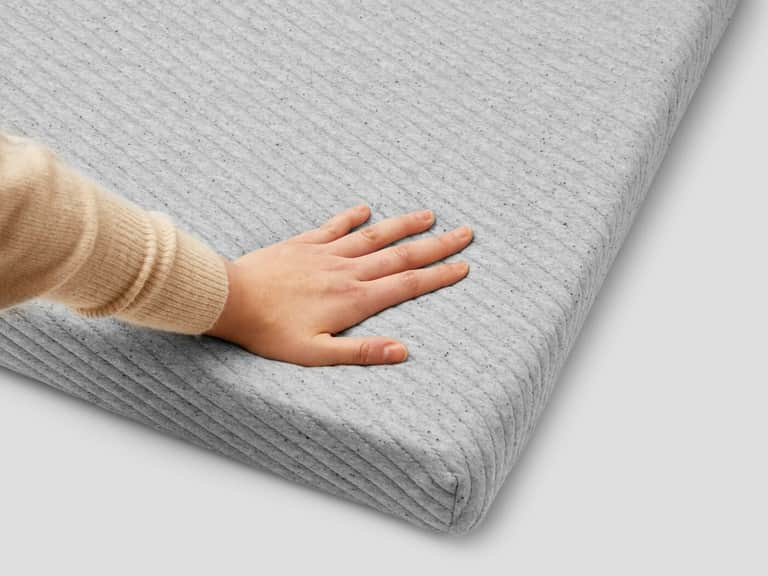
If trying a mattress is possible, allow time for more than a brief press with a hand. Lie in the positions you normally use and notice how the surface responds at the shoulder, hip, and lower back. Pay attention to whether you feel a gradual transition into support or a sudden change in resistance. Try to relax rather than holding the body rigidly; a mattress is experienced in use, not by conducting a push-up on its edge.
Take notes soon after each trial. Record the model, the stated construction, the position tested, and the sensations that stood out. If you are comparing several beds in one visit, those details can blur together. A few plain observations—“more cushioning at the shoulder,” for instance—are often more dependable than a sweeping verdict offered later from memory.
Store policies and test conditions matter. A showroom model may differ from a new mattress in feel, and the surrounding bedding can affect the surface. When purchasing without an in-person trial, read the current return terms carefully, including how long the trial lasts, whether a break-in period is required, and what costs or conditions apply. Policies can change, so check the terms in force at the time of purchase.
No brief test can guarantee that a mattress will feel the same after weeks of use. The best available approach is to combine clear construction information, a realistic assessment of your preferences, and a fair opportunity to evaluate the bed at home.
Reading an example construction without turning it into a verdict
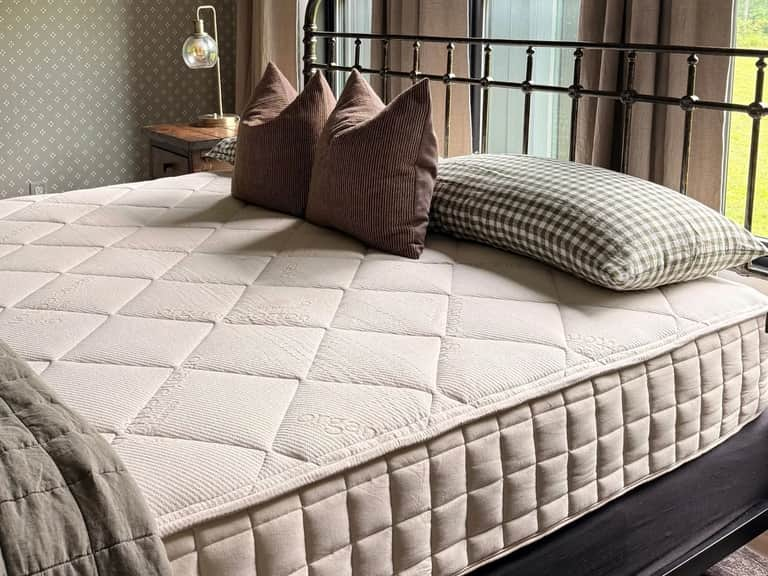
Consider the Naturepedic Serenade Organic Hybrid Mattress, described as a hybrid with eight inches of encased coils and a two-inch organic Dunlop latex comfort layer. Its listed comfort options—plush, cushion-firm, and firm—are associated with different coil support levels, while the latex comfort layer is described as soft. This is a useful illustration of why the word “firm” cannot be read as a complete account of the mattress: the upper latex and the coil system both contribute to the finished feel.
The listing identifies the mattress as eleven inches high and names organic cotton and wool among its materials, alongside the latex and coils. Those are concrete comparison points. They do not establish how the mattress will feel to every sleeper, nor do they prove that its firmness labels correspond precisely to labels used by other makers. A reader comparing it with an all-latex bed would need to note the different support systems, layer arrangement, and the terms used for each model’s comfort options.
This example also shows why product descriptions should be treated as records to examine, not conclusions to repeat. A reviewer can document what a listing states, distinguish that from independently tested performance, and explain what information remains unavailable. That distinction is central to a research-oriented approach.
Common comparison mistakes
- Comparing labels as though they were standardized. A “medium” rating is meaningful within a maker’s own range, but may not translate neatly to another brand.
- Looking only at the top layer. The core, coil system, and foundation all contribute to how the bed behaves.
- Assuming more thickness means more comfort or support. Total height does not explain layer firmness, material, or construction quality.
- Confusing material claims with performance claims. A certification or natural-material description does not predict whether a particular sleeper will find the bed comfortable.
- Treating a general sleep-position rule as a guarantee. Position and body weight can guide research, but comfort remains individual.
- Ignoring the base and care instructions. Setup requirements and maintenance affect the experience and should be part of the comparison.
These mistakes are easy to make because mattress shopping compresses a complicated object into a few words. A methodical reader can expand the frame again: identify the components, note what is known, and keep subjective impressions in their proper place.
A more useful way to choose
Begin with your own observations rather than an idealized buyer profile. Think about what has or has not worked on past mattresses. Do you prefer a surface that yields readily, or one that feels level and resistant? Are there areas where you routinely notice pressure? Do you share the bed with someone whose preferences differ? These questions can narrow the field without turning a personal preference into a universal recommendation.
Next, compare the construction. For each Dunlop latex bed, list the layer order, thickness, stated firmness, support system, cover materials, and foundation requirements. If a maker supplies only a broad label, record that limitation. Ask whether the specifications describe the mattress as a whole or individual components, and whether different firmness options change the latex, the support unit, or both.
Finally, consider how you will evaluate the bed after it arrives. Read the trial policy and care directions before ordering, not after. Make sure the foundation meets the manufacturer’s requirements. During the evaluation period, note comfort in your usual positions and give the mattress enough ordinary use to form a considered impression, while following the seller’s stated conditions.
The result is not a mathematically certain answer. It is a better-grounded decision—one based on construction and lived experience, rather than a single adjective on a product page.
The central point
Dunlop latex beds can be compared intelligently, but their firmness cannot be reduced to a label or a material name. The relevant details are the firmness of each layer, the thickness and position of those layers, the support system beneath them, the cover, and the foundation. Sleep position and body weight help explain why the same construction may feel different from one person to another, but neither provides a guaranteed answer.
For natural latex organic mattresses, careful reading also means separating comfort from material provenance and certification. Each is worth investigating; neither should stand in for the other. A clear record of what a mattress contains, how it is arranged, and what remains unspecified gives consumers a firmer basis for comparison than a broad promise of support ever could.